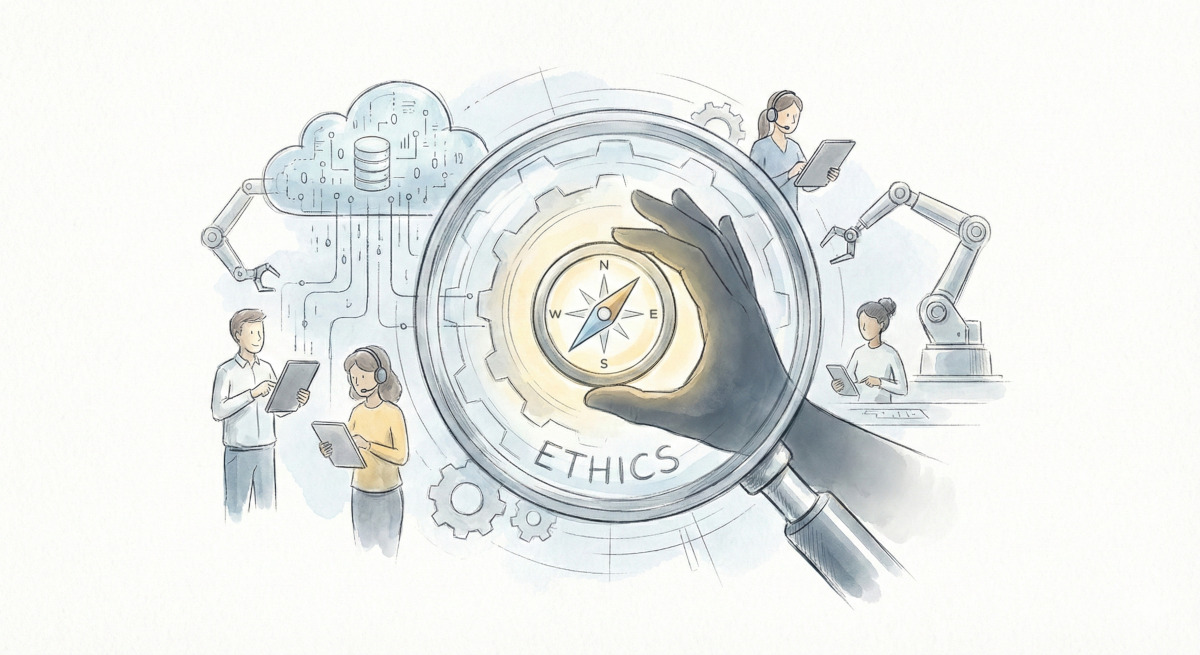

You buy a subscription to a sleek AI governance platform. It integrates with your ML pipelines, promises "end-to-end compliance," and features a dashboard full of green checkmarks. You breathe a sigh of relief, believing you’ve solved the ethics problem.
This is a dangerous illusion.
Buying a governance tool to solve AI ethics is like buying Jira and assuming you are now Agile. The software is just a container; it does not replace the hard work of defining what "safe" or "fair" actually means for your specific business. I saw this exact dynamic play out in ad tech during the GDPR rollout. Companies bought consent management platforms and thought they were done, only to realize the tool didn't fix their underlying data minimization problems.
If you delegate ethical decision-making to a script, you introduce a new layer of business risk: false confidence.
Consider a financial services company using an automated fairness monitor. The software checks for statistical parity across gender and race. It reports "No Bias Detected." The team pushes the model to production. Six months later, regulators knock on the door. The model wasn't biased on gender, but it was heavily weighting "zip code"—a proxy variable that effectively redlined entire communities.
The tool did exactly what it was coded to do. It checked the math. But it failed to understand the context. The cost here isn't just a fine under the EU AI Act; it is the erosion of trust that took decades to build. When your customers realize you automated their dignity, they leave.
You cannot fully automate ethics, but you can automate the verification of your ethical standards. Here is how to split the labor between machine and human.
Use software for the binary, objective tasks. Tools are excellent at scanning training data for PII (Personally Identifiable Information) before it hits a model. They can enforce version control on model cards or ensure every deployment has a corresponding risk assessment filed. This is hygiene. It prevents negligence, not malice.
For high-stakes decisions, you need a "human-in-the-loop" who is actually empowered to say no. This isn't just a rubber stamp. It involves establishing a cross-functional review board—legal, product, engineering—that interrogates the intent of the system. I strongly recommend looking at ISO 42001. It provides a framework for these management systems, ensuring that human oversight is baked into the process, not tacked on at the end.
Instead of relying on a static scanner, engage teams to actively break your system. This can be partially automated using adversarial attacks to test robustness, but the most valuable insights come from humans trying to trick the model into violating safety guidelines.
The biggest line item you won't see on the software invoice is "operational drag."
When you implement genuine governance—where the software flags an issue and a human actually has to investigate it—you slow down deployment. Your engineering team will complain. They will say the governance checks are blocking their CI/CD pipeline.
You have to be honest about this trade-off. Speed is often the enemy of safety. If you want to sleep at night knowing your medical diagnostic tool isn't hallucinating advice, you accept that your release cycle might move from daily to weekly.
Don't buy a tool to define your ethics. Define your risk appetite first.
Draft a clear policy on what your organization will not do with AI. Once that is on paper and agreed upon by leadership, then go buy the software to help you enforce it. If you do it the other way around, you are just automating your own confusion.